

📋 Table of Contents
How to Handle a Roadside “Fine” Professionally in Vietnam: Navigating Roadside Interactions: A Professional Guide.
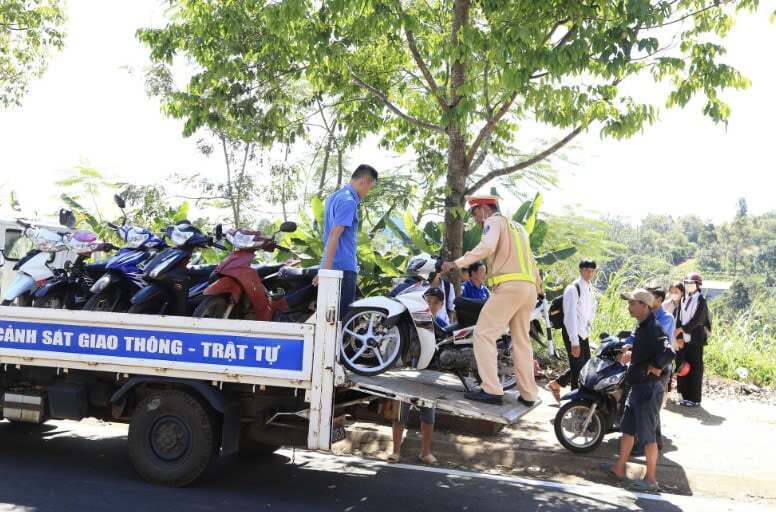
Encountering a traffic stop in Vietnam can be a nerve-wracking experience for travelers and expats alike. Whether it’s a genuine mistake or a routine check, how you handle the interaction determines how quickly—and how affordably—you get back on the road.
Remaining calm, respectful, and informed is the key to resolving these situations professionally.
1. The Initial Stop: Composure is Your Best Asset
When a police officer signals you to pull over (usually with a rhythmic wave of a baton), do so immediately and safely.
- Turn off your engine: This signals cooperation and that you aren’t planning to bolt.
- Remove your helmet and sunglasses: Making eye contact and showing your face is a sign of respect in Vietnamese culture.
- Stay Polite: A simple “Xin chào” (Hello) and a smile go a long way. Aggression or visible frustration will almost always result in a more difficult interaction and a higher potential fine.
2. Understanding the “Two Paths” of Fines
In Vietnam, traffic violations are generally handled in one of two ways:
The Official Report (Biên Bản):
The officer writes a formal ticket. They will usually confiscate your driving license or the vehicle’s “Blue Card” copy. You are given a receipt and told to show up at a specific police station a few days later to pay the state and retrieve your documents. This is the most “professional” route, but it can take days to resolve, which is difficult if you are just passing through a province.
The On-the-Spot Resolution:
For minor infractions, officers may allow you to pay a “fine” directly to resolve the matter instantly. While technically informal, this is a very common way to handle minor mistakes like illegal turns or lane splitting.
3. Communication Techniques
Many officers may not speak fluent English. This language barrier can actually work in your favor if you stay patient.
- Wait for the Explanation: Let them use a translation app or gestures to explain what you did wrong (e.g., “No indicator,” “Wrong lane,” or “No license”).
- Don’t Offer Everything at Once: When asked for papers, show your International Driving Permit (IDP) and the Blue Card copy. Keep your cash and passport tucked away in a separate pocket or under the seat.
4. Negotiating Professionally
If an “on-the-spot” fine is suggested, the “price” can vary. Generally, minor infractions for foreigners range between 200,000 VND to 500,000 VND ($8 – $20 USD).
- The “Low Cash” Strategy: It is helpful to keep a small amount of cash in an easily accessible pocket, separate from your main wallet. If the requested fine is 1,000,000 VND, you can honestly show your “small” wallet and say, “This is all the cash I have on me right now.” Often, they will accept what you have to save time.
- The “Appology” Approach: If you genuinely made a mistake (like going the wrong way on a one-way street), apologize sincerely. Explain that you are a tourist and still learning the local flow. Sometimes, a respectful apology results in a warning rather than a fine.
5. When to Stand Your Ground
If you are certain you didn’t commit a violation and feel you are being unfairly targeted:
- Ask for the “Biên Bản”: Insisting on a formal ticket/written report often makes “bogus” stops disappear, as the paperwork is time-consuming for the officer.
- Dashcam/Phone: If you have a GoPro on your helmet, leave it running. While you shouldn’t shove a camera in an officer’s face, the presence of a recording device often ensures the interaction remains strictly “by the book.”
6. Prevention: The Best Way to Handle a Fine
The easiest fine to handle is the one you never get.
- Follow the “Flow”: If all the locals stop at a certain line, you should too.
- Check Your Lights: Always ride with your headlights off during the day (it’s a common reason for stops in some provinces) and on at night.
- Mirror Check: Ensure your motorbike has at least the left-side mirror attached. Missing mirrors are a “magnet” for roadside checks.
- Final Tip: Treat the interaction like a business negotiation. Stay cool, keep your voice at a steady volume, and remember that a few hundred thousand Dong is a small price to pay for a smooth journey through one of the most beautiful countries in the world.