

📋 Table of Contents
How to Verify if Your IDP is 1949 or 1968 in Vietnam: Navigating the legalities of riding in Vietnam requires knowing exactly which international document you hold. While both look similar – usually a small grey booklet – the difference between the 1949 Geneva Convention and the 1968 Vienna Convention is the difference between being legal and being unlicensed in the eyes of the Vietnamese traffic police.
Vietnam strictly recognizes the 1968 Vienna Convention. If your permit follows the 1949 rules, it is technically not valid for operating a vehicle in the country.
Here is how to tell them apart in seconds.
1. Check the Cover Page (The Most Reliable Method)
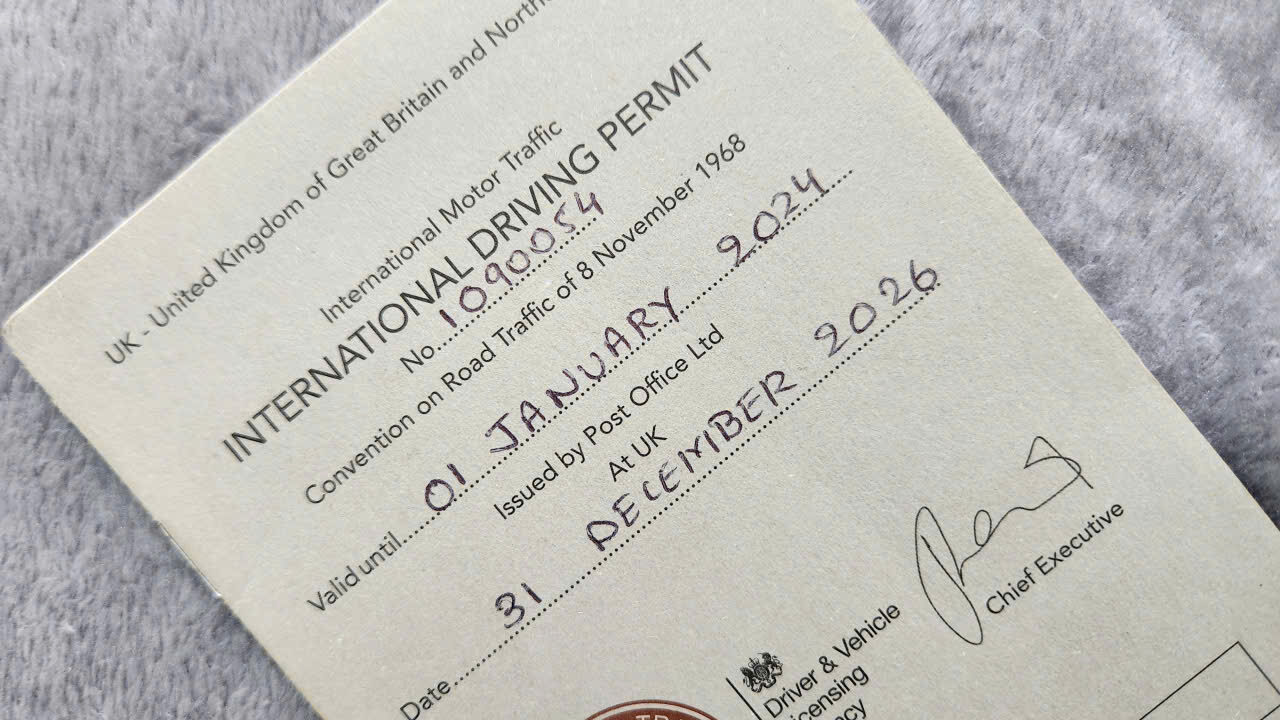
The most direct way to verify your IDP is to look at the text on the front cover or the very first inside page. Every IDP must state which convention it was issued under.
- The 1968 Permit: Look for the phrase: “Convention on Road Traffic of 8 November 1968.”
- The 1949 Permit: Look for the phrase: “Convention on Road Traffic of 19 September 1949.”
If the text mentions “Geneva,” it is almost certainly a 1949 permit. If it mentions “Vienna,” it is a 1968 permit.
2. Check the Expiry Date
The two conventions have different standard validity periods, which can be a secondary clue if the cover is faded or damaged.
- 1949 IDP: These are typically valid for only one year from the date of issue.
- 1968 IDP: These are often valid for up to three years (though they cannot exceed the validity of your domestic license). If your booklet shows a three-year window, you are likely holding the 1968 version.
3. Review the Vehicle Categories
Open the booklet to the pages with the stamp boxes (usually near the back). While both use letters (A, B, C, D, E), the 1968 version often includes sub-categories and more detailed pictograms.
- Class A: In both versions, this covers motorcycles.
- The Difference: The 1968 IDP is part of a more modern system designed to standardize licensing across borders more effectively. In Vietnam, if you do not have a stamp next to the “A” (Motorcycle) category, the document is useless for riding, regardless of which convention it follows.
4. Verify the Issuing Authority
Not all countries issue both types. For example:
- United States (AAA/AATA): Only issues the 1949 IDP. This is why US citizens often struggle with legal riding in Vietnam; their national IDP is not recognized.
- Australia (NRMA/RACV): Issues the 1949 IDP by default, but some branches can provide 1968 versions upon specific request for certain countries.
- UK/Europe: Most European nations moved to the 1968 IDP years ago.
Why Does This Matter in Vietnam?
Since 2014, Vietnam has been a signatory to the 1968 Vienna Convention. If you are stopped by the authorities and present a 1949 IDP, they may treat you as having “No Valid License.”
This has two major consequences:
- Fines and Seizure: Your bike can be impounded for up to 7 days.
- Insurance Denial: Almost all travel insurance policies contain a clause stating they are only valid if you are “legally licensed in the jurisdiction where you are riding.” If your IDP isn’t recognized by Vietnamese law, your insurance company may deny your claim in the event of an accident.
- Pro Tip: If you find you have the 1949 version, do not attempt to “argue” its validity with local officers. Instead, look into converting your domestic license to a Vietnamese Temporary Driver’s License, which is a 10-day process that provides 100% legal coverage.
Good Luck!