
📋 Table of Contents
Head-to-Head: CFMOTO 450MT vs. Royal Enfield Himalayan 450 in Vietnam (2026 Review): The definitive mid-weight adventure showdown for the 2026 touring season. Discover the explicit advantages, disadvantages, and mechanical differences of the CFMOTO 450MT vs. Royal Enfield Himalayan 450 on Vietnam’s extreme terrain.
Head-to-Head Showdown: CFMOTO 450MT vs. Royal Enfield Himalayan 450 – The Ultimate 2026 Mid-Weight Duel
Close your eyes and listen to the mechanical symphony of the Northern frontier. To your left, a sharp, aggressive twin-cylinder howl echoes off the vertical limestone cliffs of Mèo Vạc. To your right, a deep, rhythmic, gravelly thud punches through the thick mountain fog of the Sa Mưu Pass. This is the soundtrack of the modern mid-weight adventure revolution. The days of heavy, oversized 1,000cc beasts dominating the touring landscape are gone. In 2026, international riders arriving in Vietnam demand agile, punchy, and highly capable 450cc machines that can cruise the highway from Hanoi and instantly transition into aggressive dirt tools.
- At the absolute center of this global sandbox war stand two dominant icons: the rally-bred, parallel-twin CFMOTO 450MT and the heritage-infused, single-cylinder Royal Enfield Himalayan 450.
- At Duy Anh Motorbikes, we don’t evaluate motorcycles on clean showroom floors. We strip them down in our Hanoi workshop, upgrade their armor, and launch them into thousands of kilometers of real-world abuse. We have pinned these bikes through the deepest red clay ruts of Du Già, slammed them across the sharp limestone tracks of Cao Bằng, and tested their cooling limits in the intense tropical heat of Central Vietnam.
- This is our definitive, hyper-technical, 2,000-word head-to-head comparison. If you are planning an expedition across Vietnam, this guide breaks down the raw physics, mechanical componentry, and explicit advantages and disadvantages of both machines to help you select the perfect weapon for your journey.
1. Engine Architecture & Power Delivery: Throttle Character on the Trail
The core personality of any adventure motorcycle is defined by its internal combustion layout. These two manufacturers have taken completely opposing engineering paths to achieve similar power targets, resulting in radically different riding sensations.
The CFMOTO 450MT Engine Dynamics
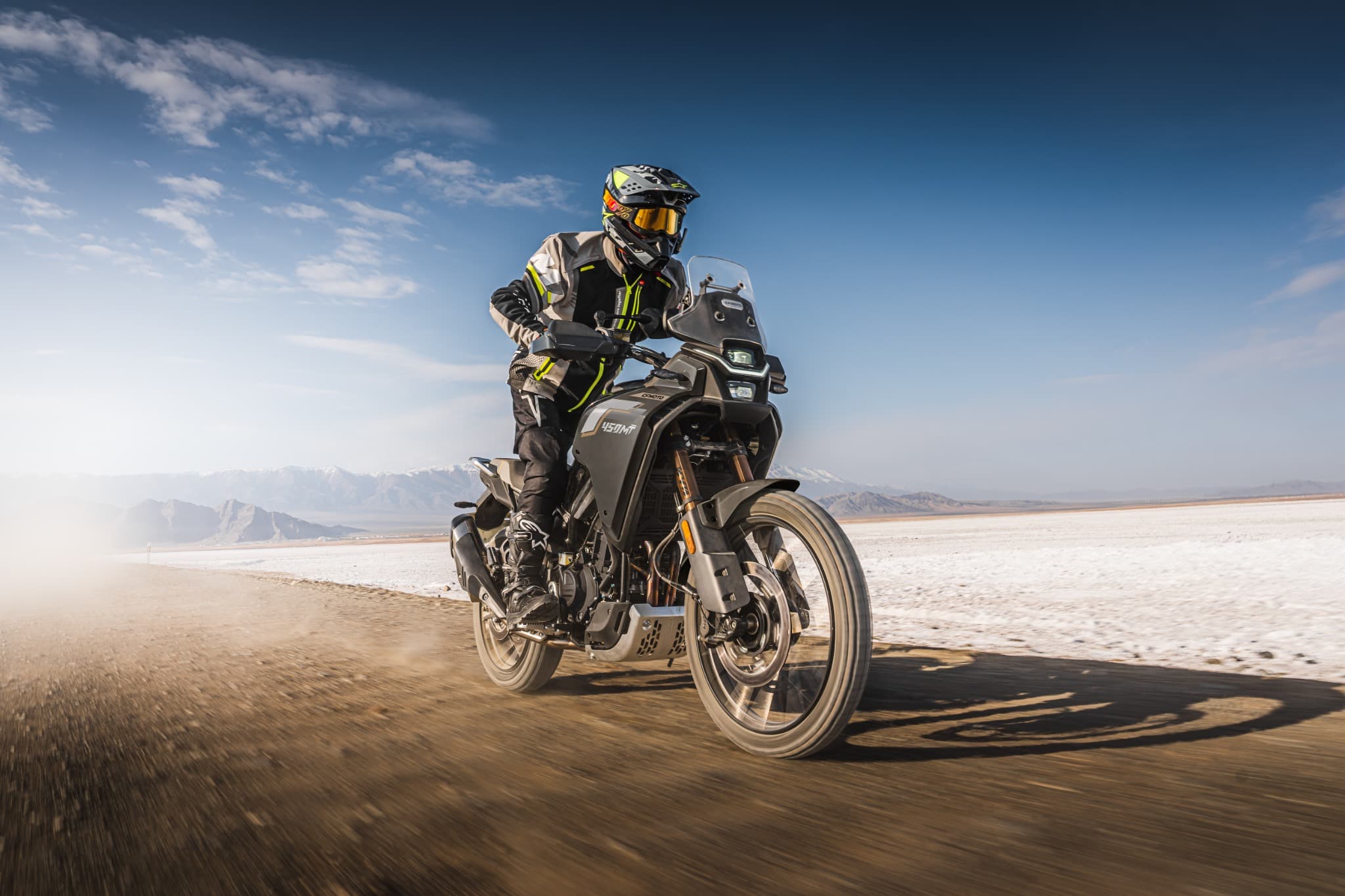
- The 450MT is propelled by a 449.5cc liquid-cooled parallel-twin engine featuring a double overhead camshaft (DOHC) design and a highly strategic 270-degree crankshaft configuration. It produces 44.18 PS (approx 44 HP) at 8,500 RPM and 44 Nm of torque at 6,250 RPM. Because the crank pins are offset to 270 degrees, this engine fires unevenly, perfectly mimicking the power pulses and traction-finding traits of a 90-degree V-twin.
Engine Advantages for the Trip:
- High-RPM Highway Refinement: On the long, monotonous 180km transit highway from Hanoi to the mountains, the dual internal counterbalances work flawlessly. The engine remains incredibly smooth at 100-110 km/h, removing the high-frequency vibrations that cause hand numbness and mirror blur.
- Instant Overtaking Power: The twin-cylinder layout revs aggressively. When you are stuck behind a slow-moving, smoke-belching container truck on a steep mountain incline, a quick downshift allows the engine to rush into its power band, rocketing you past the hazard with sports-bike urgency.
- Mechanical Cable Throttle Simplicity: The 450MT utilizes a traditional mechanical cable linkage to its dual throttle bodies. This provides a raw, connected, and completely predictable feel at the twist grip, with zero electronic lag or disconnect.
Engine Disadvantages for the Trip:
- Low-Speed Throttle Jerkiness: Due to tight modern emissions mapping, the transition from a closed throttle to an open throttle at very low RPMs can feel abrupt and “twitchy.” When executing tight, slow-speed U-turns on narrow concrete paths, you must constantly slip the clutch to smooth out the power delivery.
- Higher Fuel Consumption Under Pressure: When ridden aggressively through the rev range on mountain passes, the twin-cylinder engine consumes fuel faster than a single-cylinder, slightly shortening its real-world range when pushing hard.
The Royal Enfield Himalayan 450 Engine Dynamics
-
-
- The Himalayan is powered by the “Sherpa 450″—Royal Enfield‘s first-ever liquid-cooled, high-RPM engine. It is a 452cc single-cylinder thumper with 4 valves and dual overhead cams, producing 40.02 PS at 8,000 RPM and 40 Nm of torque hitting early at 5,500 RPM.
- This engine uses a ride-by-wire electronic throttle system and functions as a modern, high-tech tractor.
-
Engine Advantages for the Trip:
- Unstoppable Low-End Momentum: The single-cylinder design uses a heavy flywheel mass. The torque hits incredibly low in the rev range at 5,500 RPM. When you are crawling up a near-vertical clay chute or wading through a muddy riverbed, you can drop the engine speed to a walking pace, and the Sherpa engine will relentlessly “thump” its way forward without any signs of stalling.
- Linear Ride-by-Wire Power Modes: The electronic throttle allows for distinct riding maps (Road and Rain). In Torrential Rain mode, the computer softens the initial power delivery, preventing the rear tire from breaking traction on slick, wet asphalt.
- Superb Low-Speed Efficiency: At lower trail speeds, the single piston is exceptionally fuel-efficient. It stretches its 17-liter fuel tank out to an impressive 400-450km range, providing massive confidence in remote border regions where gas stations are non-existent.
Engine Disadvantages for the Trip:
-
-
- High-RPM Buzzing: Because it houses a massive single piston moving up and down, once your highway speed crosses 105 km/h and the revs breach 6,500 RPM, a secondary vibration creeps directly into the foot pegs, seat, and handlebars. Over an 8-hour riding day, this buzz accelerates rider fatigue.
- Lazy Power Build-Up: The engine does not rev with the snappy excitement of the CFMOTO. It takes longer to build momentum, requiring a more calculated and patient approach when overtaking traffic on fast roads.
-
2. Suspension Engineering & Ground Clearance: Dialed Precision vs. Magic Carpet Plushness
-
-
- When the asphalt completely disintegrates into a chaotic field of ruts, landslides, and sharp limestone boulders, your suspension geometry dictates whether you stay upright or face a hard crash.
-
The CFMOTO 450MT Suspension Mechanics
CFMOTO equipped the 450MT with premium, fully adjustable KYB (Kayaba) 41mm upside-down front forks and an aluminum swing arm linked to a KYB monoshock. Both ends deliver a true off-road specification of 200mm of travel.
Suspension Advantages for the Trip:
- Hyper-Adjustability for Load Management: The left fork cap controls compression damping, and the right controls rebound. This is a massive advantage when renting. If you are a heavier rider carrying a full load of aluminum panniers, we can click the adjusters to stiffen the stroke, preventing the bike from wallowing or bottoming out on the bumps.
- Chassis Stability on Asphalt: By stiffening the front compression valving, you can drastically reduce front-end dive under heavy braking. This keeps the bike’s geometry flat and stable, allowing you to carve mountain curves with supreme confidence.
- Suspension Disadvantages for the Trip:
- Lower Overall Ground Clearance: Sitting at 220mm of ground clearance, it is lower than its competitor. The under-slung chassis design means the bash plate will take direct hits from tall boulders more frequently on technical paths.
- Limits Under Extreme Abuse: The stock KYB springs are progressively wound but lean toward the softer side. If a fast, aggressive rider jumps the bike over erosion ruts, the suspension will use up its 200mm of travel quickly and hit the rubber bump stops.
The Royal Enfield Himalayan 450 Suspension Mechanics
-
-
- Royal Enfield partnered with Showa to develop a massive 43mm upside-down front fork and a linkage-type rear monoshock, also offering 200mm of suspension travel. Crucially, the front forks are completely non-adjustable, and the rear shock only features adjustment for spring preload.
-
Suspension Advantages for the Trip:
- The Magic Carpet Ride Quality: The factory-set Showa valving is an absolute masterpiece for general adventure touring. It features highly sophisticated dual-stroke damping that completely eliminates the feel of sharp potholes, cobblestones, and corrugated concrete. It delivers an incredibly plush, comfortable ride right out of the box.
- Towering Ground Clearance: Boasting a superior 230mm of ground clearance, the Himalayan sits noticeably taller. Combined with the thicker, stiffer 43mm front fork tubes, this bike can smash through deep, rocky riverbeds without any fear of catching the engine casing on submerged rocks.
- Suspension Disadvantages for the Trip:
- Zero Front Adjustability: If you find the front end too soft during aggressive off-road descents or when braking hard into a downhill switchback, you cannot adjust it. You are locked into the factory configuration unless you physically disassemble the forks to change the oil weight and spring rates.
- Pronounced Front-End Dive: Under sudden, emergency braking on asphalt, the soft initial stroke of the Showa forks causes the front of the bike to dive rapidly, shifting the weight forward and reducing rear-wheel braking effectiveness.
3. Braking Performance & Componentry Under Extreme Conditions
Slowing a loaded adventure motorcycle down a 20-degree muddy gradient requires immense hydraulic force and precise modulation at the levers.
The CFMOTO 450MT Braking Architecture
-
-
- The 450MT uses stopping hardware from J.Juan (a premium subsidiary of Brembo). The front features a single 320mm disc clamped by an aggressive four-piston radial caliper, while the rear utilizes a 240mm disc with a single-piston floating caliper.
-
Braking Advantages for the Trip:
- Sharp, Powerful Initial Bite: The four-piston radial caliper provides immediate, sharp deceleration with minimal effort at the handlebar lever. It feels modern, responsive, and requires only one finger to operate effectively on asphalt.
- Advanced Switchable Safety Suite: Controlled via a dedicated mechanical button on the handlebars, you can instantly deactivate the rear ABS and the Bosch Traction Control System simultaneously while riding. This allows you to break rear traction on demand to slide the tail into dirt corners.
Braking Disadvantages for the Trip:
Intimidating on Loose Gravel: Because the initial bite of the front brake is so sharp, an inexperienced rider grabbing a handful of front brake on loose gravel can easily lock up the front wheel if the front ABS is off, leading to a quick front-end wash.
The Royal Enfield Himalayan 450 Braking Architecture
-
-
- The Himalayan uses anchors from ByBre (By Brembo). The front operates a single 320mm disc with a traditional dual-piston floating caliper, but the rear is upgraded to a massive 270mm disc with a single-piston caliper.
-
Braking Advantages for the Trip:
- Progressive, Forgiving Modulation: The dual-piston front caliper doesn’t snap shut aggressively. It features a progressive feel that requires a firmer squeeze. This is highly forgiving on loose off-road surfaces like wet grass or river shale, allowing you to modulate braking traction without accidentally triggering the ABS system.
- Massive Rear Brake Power: The oversized 270mm rear disc is an absolute savior for downhill dirt descents. It provides exceptional stopping force, allowing you to control your descent speed entirely with your foot pedal.
- Braking Disadvantages for the Trip:
- Wooden Lever Feel on Asphalt: When riding fast on paved mountain roads, the front brake lever can feel slightly “wooden” and requires a strong, multi-finger pull to bring the 196kg mass down from high speeds.
- Clunky ABS Menu Integration: To turn off the rear ABS, you must stop the bike, enter the digital sub-menus on the round TFT screen using a small handlebar joystick, and select the off-road mode. If you cycle the ignition key, the bike automatically resets to full ABS mode, forcing you to repeat the process.
4. Wheel Integration, Chassis Flex & Puncture Resiliency
A puncture on a remote border road can derail an entire trip itinerary. How a bike handles tire damage and frame stress is critical to fulfilling a remote expedition.
The CFMOTO 450MT Configuration
- Wheels: 21-inch front, 18-inch rear cross-spoke aluminum alloy rims.
- Tires: Cross-Spoke TUBELESS setup as standard.
- Frame: High-tensile steel trellis framework.
Wheel/Chassis Advantages for the Trip:
- The Tubeless Salvation: This is the ultimate competitive edge. Because the spokes mount to the outer flange of the rim bed, the rim remains completely sealed. If a sharp limestone shard punctures your tire carcass near the Chinese border, you do not need to drop the wheel. You plug it with a rubber strip in 3 minutes, hook up the compressor to the dash, and ride on.
- True 18-Inch Off-Road Rear Rim: The 18-inch rear wheel size is the global standard for dirt riding. It allows you to fit aggressive, deep-knobby enduro tires that bite deep into thick red clay mud.
Wheel/Chassis Disadvantages for the Trip:
- Exposed Plastic Fairings: The trellis frame is wrapped in aggressive, angular plastic bodywork. In a hard off-road crash, these panels are prone to cracking or snapping unless protected by heavy-duty aftermarket crash bars.
The Royal Enfield Himalayan 450 Configuration
- Wheels: 21-inch front, 17-inch rear spoked rims.
- Tires: Traditional INNER TUBE setup on the base variants (Tubeless available only on top-tier Hanle Black export models).
- Frame: Steel twin-spar tubular frame utilizing the engine as a stressed member.
Wheel/Chassis Advantages for the Trip:
-
-
- Indestructible Exo-Skeleton Frame: The Himalayan is built like a tank. It features integrated steel luggage racks around the fuel tank that act as factory crash bars. If the bike slides down an asphalt road or drops onto a rock, the metal chassis takes the abuse, protecting the mechanical core perfectly.
- Extreme Frame Rigidity: The twin-spar frame resists twisting heavily under immense loads. When carrying heavy metal panniers over a torturous washboard road, the chassis remains completely stable and tracks straight.
-
Wheel/Chassis Disadvantages for the Trip:
-
-
- The Inner Tube Nightmare: If you puncture a tube-type variant on a remote section of the Western Ho Chi Minh Road, your trip grinds to a halt. You must find a flat piece of ground, jack the bike up, extract the rear axle, use heavy tire irons to break the bead, pull the inner tube out, and patch or replace it. It is an exhausting, technical ordeal.
- Compromised 17-Inch Rear Wheel Size: The choice of a 17-inch rear wheel limits your ability to mount full-bore, professional off-road knobby tires, forcing you to rely on 50/50 dual-sport rubber that can struggle in deep, slick mud.
-
5. Ergonomics, Seating Triangles & Weight Distribution
Your physical interaction with the motorcycle dictates your endurance level over a multi-day tour across Vietnam.
The CFMOTO 450MT Ergonomic Profile
-
-
- Seat Height: 820mm (accessible and compact).
- Rider Pose: Sitting “in” the machine with a rally-inspired cockpit view.
-
Ergonomic Advantages for the Trip:
-
-
- Short Rider Friendly: The narrow profile of the chassis where the seat meets the fuel tank means that even riders with a 168cm stance can comfortably get both feet flat on the ground. This provides massive confidence when stopping on loose, sloped gravel tracks.
- Rally Stand-Up Stance: The bike feels incredibly narrow between your knees when you stand on the pegs. It allows you to lock your lower body onto the tank, giving you the freedom to steer the bike with your lower torso weight.
-
Ergonomic Disadvantages for the Trip:
-
-
- Cramped for Tall Riders: If your height exceeds 180cm (5’11”), the distance between the seat and the foot pegs feels tight. Over a long day, this acute knee angle can cause joint cramping.
- Wind Buffeting: The rally-style navigation tower looks incredible, but it positions the windscreen close to the rider, creating air turbulence around the helmet peak for taller pilots at speed.
-
The Royal Enfield Himalayan 450 Ergonomic Profile
-
-
- Seat Height: 825mm to 845mm (adjustable standard seat).
Rider Pose: Sitting “on” top of a spacious, long-wheelbase adventure rider.
- Seat Height: 825mm to 845mm (adjustable standard seat).
-
Ergonomic Advantages for the Trip:
-
-
- A Tall Rider’s Paradise: The cockpit is incredibly spacious. There is a generous stretch from the seat to the foot pegs, allowing tall riders to stay relaxed. The rider’s seat is wide, heavily padded, and remains comfortable for 8 hours straight.
- Flawless Low-Speed Balance: Despite its 196kg kerb weight (making it nearly 15kg heavier than the dry weight of the CFMOTO), the fuel tank drops deep down into the lower half of the frame. This low mass centralization makes the bike feel remarkably light and balanced when filtering through tight city traffic or balancing at a walking pace on a trail.
-
Ergonomic Disadvantages for the Trip:
-
-
- Intimidating Seat Stance: For riders under 173cm, the tall seat combined with a wider frame midsection makes it highly difficult to securely dab a foot down on uneven, muddy surfaces, increasing the risk of a tip-over.
- The Weight Penalty: If you get stuck in a deep mud hole or drop the bike on a steep incline, lifting a 200kg machine in Vietnam’s intense humidity will rapidly sap your physical reserves.
-
The Strategic Fleet Match: Which Bike Rules Your Route?
-
-
- Choose the CFMOTO 450MT if: Your tour is a fast-paced, aggressive mix of sweeping asphalt passes and technical rocky detours. It is the absolute king for shorter riders, performance enthusiasts, and anyone who wants a lightweight, snappy rally feel with the immense safety net of cross-spoke tubeless wheels.
- Choose the Royal Enfield Himalayan 450 if: You are a taller rider planning a slow, rugged, long-distance expedition through the most remote stone tracks of the far North. If your riding style favors low-RPM torque, bulletproof metal armor protection, and all-day seat comfort, the Sherpa thumper is your ultimate pack mule.
-
Frequently Asked Questions: CFMOTO 450MT vs. Himalayan 450
The Question: Which bike handles the chaotic traffic and speed traps of Vietnam’s highways better?
The Answer: Winner: The CFMOTO 450MT.
- The Reason: Its parallel-twin engine architecture is inherently smoother at highway speeds, completely eliminating the high-RPM handle-bar buzz that affects the single-cylinder Himalayan. Furthermore, the cable throttle provides instant, crisp engine response to safely zip past slow trucks, while its sharp J.Juan brakes allow for immediate deceleration when entering local town speed zones.
The Question: If I drop the motorcycle in a remote valley, which bike is more durable against damage?
The Answer: Winner: The Royal Enfield Himalayan 450.
-
-
- The Reason: The Himalayan is wrapped in a steel exo-skeleton rack system that protects the tank and core mechanics like a factory cage. It uses steel spars and minimal brittle plastics. The CFMOTO 450MT, while tough, relies on angular plastic fairings that can scratch, crack, or pop out of their retention clips during a hard impact against sharp limestone unless you install full aftermarket wrap-around crash bars.
-
The Question: How do the cockpits and navigation tech compare for navigating remote border roads?
The Answer: Winner: The Royal Enfield Himalayan 450.
-
-
- The Reason: The round Showa TFT display integrates full-color Google Maps directly onto the motorcycle screen via your phone. For international tourists navigating the unmarked, confusing junctions of the border patrol roads, having a moving map right on the dash is a massive luxury. The CFMOTO 450MT’s screen is highly functional but only supports basic arrow-based turn-by-turn navigation data.
-
The Question: Which bike is better for riding through deep river crossings or heavy monsoon downpours?
The Answer: Winner: A Tie, with different technical strengths.
-
-
- The Reason: The Himalayan 450 features a very high air intake placement located directly under the fuel tank, meaning it can wade through deep water crossings without sucking water into the airbox. On the other hand, the CFMOTO 450MT offers switchable Bosch Traction Control, which acts as a massive safety net to stop the rear wheel from spinning out when accelerating over wet, mossy bridges during sudden downpours.
-
Are you ready to settle the score on the roads of Vietnam?
At Duy Anh Motorbikes, our entire 2026 rental fleet is fully prepped with heavy-duty engine guards, premium high-traction dual-sport tires, and custom luggage setups. [Click Here to Reserve Your CFMOTO 450MT] or [Click Here to Book Your Himalayan 450] and kick start your ultimate Vietnamese expedition today!