

📋 Table of Contents
The Hanoi Mechanic: Why City Prep is Better Than Roadside Repairs: Relying on roadside mechanics in remote Vietnam can ruin your expedition. Learn why intensive pre-trip city prep in Hanoi is mathematically and mechanically vital for modern adventure motorcycles in 2026.
The Romantic Myth vs. The Modern Frontier Reality
- For generations of backpackers and casual travelers traversing Southeast Asia, the roadside motorcycle mechanic—known universally in Vietnam as the “Sửa Xe”—has been elevated to the status of a folklore hero. The narrative is deeply embedded in the travel community: you buy a cheap, third-hand commuter bike, ride it into the wild mountains of the North, break down in a remote village, and a local mechanical genius patches the engine together using nothing more than a pair of rusty pliers, a hammer, and a strip of rubber cut from an old inner tube. For a few dollars and a shared cigarette, you are back on the road, laughing about the romance of raw improvisation.
- As we navigate the touring landscape of 2026, this romantic myth is colliding head-on with a brutal mechanical reality. The motorcycles defining modern exploration through the Ha Giang Loop, the Northeast Frontier, and the Northwest Traverse are no longer simple, low-compression, 110cc air-cooled underbones with primitive carburetors. The new generation of adventure travel relies on precision middleweight platforms like the twin-cylinder CFMOTO 450MT, the liquid-cooled DOHC
Royal Enfield Himalayan 450, and high-spec dual-sports like the fuel-injected Honda CRF300L.
These modern machines are highly sophisticated rolling computers. They utilize electronic fuel injection (EFI) maps that recalculate atmospheric pressure at millisecond intervals, advanced dual-channel Anti-lock Braking Systems (ABS) governed by 6-axis Inertial Measurement Units (IMUs), and high-tolerance valvetrains that operate under immense thermal loads.
- When you push a machine of this complexity into the extreme topography of the North, relying on the backyard improvisation of a roadside village mechanic is no longer a charming adventure; it is an executive operational failure. A single misdiagnosed electrical fault or an improperly torqued internal component in a remote district can instantly transform your high-spec adventure tour into a logistical nightmare.
- To ensure the success of a 2,000-kilometer expedition, you must understand why master-level pre-trip city prep within a dedicated Hanoi facility is mechanically and financially superior to any roadside repair network
1. The Technical Tooling Divide: Precision Gauges vs. Blunt Force
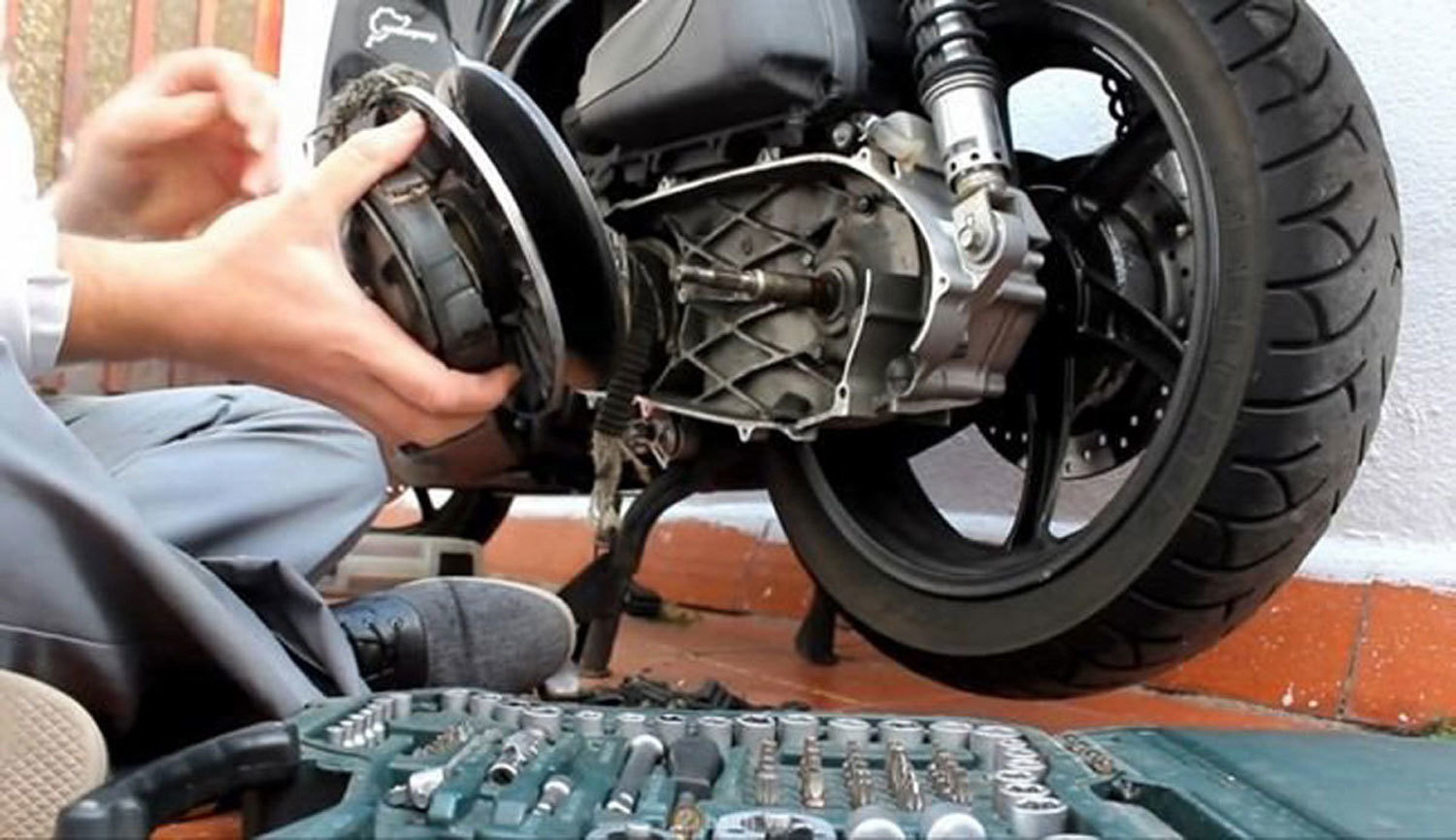
The most immediate difference between a professional metropolitan staging workshop like the Duy Anh Motorbikes command center in Hanoi and a roadside repair stall in a village like Mèo Vạc or Bắc Hà is the sophistication of the physical and electronic tooling inventory.
The Electronic Diagnostic Gap
- When a modern EFI motorcycle behaves erratically at high altitude—perhaps experiencing an intermittent throttle lag or a rough idle as you ascend past 1,500 meters—the underlying cause is rarely a mechanical failure. It is almost always a digital sensor anomaly. The ECU relies on inputs from the Intake Air Temperature (IAT) sensor, the Manifold Absolute Pressure (MAP) sensor, and the Oxygen ($O_2$) sensor inside the exhaust header to maintain an optimal air-fuel ratio.
- In our Hanoi facility, diagnosing these anomalies requires plugging the motorcycle’s specialized OBD-II data port directly into a proprietary digital diagnostic scanner. This hardware reads live data streams, maps fuel trim variances, and isolates specific error codes instantly.
Conversely, a roadside village mechanic has zero access to digital diagnostic software. Their electronic testing equipment usually consists of a basic 12V test light or a crude multi-meter. Confronted with an EFI error lamp on a CFMOTO 450MT dashboard, a rural mechanic is forced to guess, often slicing into sealed wiring harnesses or manually adjusting throttle bodies in a blind attempt to resolve an issue governed entirely by code.
The Physics of Torque Control
- Every critical fastener on an adventure motorcycle—including axle nuts, brake caliper mounting bolts, triple-clamp bolts, and engine mounts—is engineered to be tightened to a specific mathematical torque value, measured in Newton-meters ($\text{Nm}$). This torque creates a calculated tension within the bolt shank, preventing it from backing out due to engine harmonic vibration while ensuring the metal is not stretched past its elastic limit.
The formula for torque ($T$) relative to the applied force ($F$) and the length of the lever arm is:
T = F \times r \times \sin
- In a professional Hanoi garage, technicians use calibrated digital and click-type torque wrenches to verify that every fastener matches the exact factory service manual specification before the bike clears the gate.
- In a remote village stall, the standard tool of choice for almost all fasteners is either an uncalibrated pneumatic impact gun or a simple t-wrench extended with a piece of steel pipe for extra leverage. When a roadside mechanic applies an impact gun to an aluminum engine case drain bolt or a high-tensile axle spindle, they routinely apply forces far exceeding the metal’s shear strength. This stretches the threads, creates microscopic stress fractures, and causes stripped casings that will slowly weep oil across the next 500 kilometers of your loop.
2. The Parts Ecosystem: Authentic OEM Tolerances vs. Commuter Adaptations
- The supply chain geometry of Vietnam dictates that premium, model-specific components are heavily centralized within major urban logistics centers. When an adventure bike requires a replacement component on the trail, the rural “Sửa Xe” is forced to operate within an ecosystem of scarcity.
The Proliferation of “Hàng Giả” (Counterfeit Parts)
- Rural repair shops survive by servicing millions of local commuter scooters like the Honda Wave, Honda Vision, or Yamaha Exciter. Their inventory reflects this demographic. The shelves are packed with universal cables, generic spark plugs, and low-grade brake pads.
- Worse, remote provinces are primary dumping grounds for counterfeit components—known locally as “Hàng Giả.” These look identical to OEM parts but are manufactured using inferior metallurgy and low-grade plastics.
- If your Honda XR190L burns through its clutch plates on a steep incline near Bảo Lạc, a local mechanic will rarely turn down the business. Instead, they will source a generic clutch plate designed for a smaller commuter bike, file down the tabs to force it into the XR’s basket, and reassemble the engine case. While this primitive modification might function for 20 kilometers of flat riding, the material tolerances will fail under the immense friction of the next mountain pass. The plates will glaze, slip, and disintegrate, contaminating your engine oil with fibrous debris that will block the oil pump strainer and destroy your crankshaft bearings.
Pre-Trip Staging Inventory Quality
- When you execute a complete pre-trip service in a Hanoi specialist workshop, you are drawing from an uncompromised inventory pipeline. Every gasket, oil filter element, O-ring, and brake pad is an authentic factory-certified OEM part designed precisely for that engine’s thermal expansion rate.
- We don’t “make things fit.” If a bike shows even 10% wear on a critical consumable component during its Hanoi inspection, that component is entirely discarded and replaced with fresh factory stock, ensuring the machine enters the mountains with zero compromised components.
3. Fluid Dynamics and Tribology: Premium Chemistry vs. Sump Swaps
- The fluids circulating through your adventure motorcycle’s engine, cooling channels, and braking lines are highly engineered liquid components that degrade rapidly under extreme environmental stress. Roadside mechanics rarely possess the specific chemical grades required to preserve high-performance architectures.
The Wet Clutch Oil Emergency
- As analyzed in our technical studies on lubricants, high-torque motorcycles with shared sumps demand oil carrying the strict JASO MA2 certification. This ensures that the fluid provides maximum wear protection for the high-pressure transmission gears while maintaining an optimal coefficient of static friction across the wet clutch fibers to prevent slippage.
- In remote mountain villages, the standard oil stocked by roadside stalls is cheap, mineral-based 10W-30 or 20W-40 oil designed for low-performance dry-clutch automatic scooters or basic underbones. This oil often contains generic friction modifiers intended to improve fuel economy in small commuter vehicles.
- If a roadside mechanic pours this standard scooter oil into the crankcase of a Himalayan 450, the results are mechanically disastrous. The friction modifiers will chemically coat the clutch plates, causing the clutch to slip violently under load. Within 50 kilometers of climbing toward Sapa, your clutch assembly will overheat, warp, and weld itself together, leaving you completely stranded.
Brake Fluid and Vapor Lock Science
- Descending the long, aggressive declines of the O Quy Ho or Ma Pi Leng passes puts immense thermal stress on your braking system. The heat generated by the brake pads transfers directly through the caliper pistons into the hydraulic brake fluid. Professional ADV fleets require pure, moisture-free DOT 4 or DOT 5.1 fluid, which possesses a dry boiling point exceeding 230C to 260C.
- In high-humidity mountain environments, open fluid bottles sitting on the shelves of rural repair shops quickly absorb atmospheric moisture—a phenomenon known as hygroscopic contamination. If a roadside mechanic tops off your reservoir with old, moisture-saturated fluid from a previously opened bottle, the boiling point of your braking system instantly plummets to under 140C.
- As you descend a steep pass, this contaminated fluid will reach its boiling point rapidly, transforming the liquid into compressible gas bubbles within the line. This induces instantaneous Vapor Lock. You pull the brake lever, it goes completely soft against the handlebar grip, and you lose $100\%$ of your stopping power on the edge of a cliff. A meticulous flush with fresh, sealed fluid at a Hanoi base camp completely eliminates this risk
4. Suspension and Chassis Alignment: The Limits of Field Patching
The “washboard” ripples, unexpected potholes, and deep ruts of the limestone loops subject a motorcycle’s suspension and chassis to constant structural abuse. When these systems show signs of failure, a roadside fix can introduce extreme handling instabilities.
The Fork Seal Myth
- A leaking front fork seal is a common hazard when riding through the abrasive karst dust of the Northeast. The dust gets trapped under the rubber sealing lip, allowing hydraulic fork oil to weep out down the chrome stanchion.
- A rural roadside mechanic’s solution to a leaking fork seal is usually primitive. They will pry up the outer dust cap with a flathead screwdriver (frequently scratching the delicate chrome plating, which permanently ruins the fork tube), wipe the seal with a rag, and occasionally wrap a piece of teflon tape or wire around the assembly to stop the leak.
- This roadside intervention fails to solve the internal fluid dynamic crisis. Suspension forks work via precise volumetric damping. If a fork has leaked 50ml of oil, the dampening characteristics of that fork leg change completely relative to the opposite side. The front end of the machine will become unbalanced, leading to severe front-wheel tracking issues during high-speed cornering and a dangerous phenomenon known as “head-shake” when hitting mid-corner bumps.
The Hanoi Rebuild Protocol
Fixing a fork seal properly requires a laboratory-clean environment, special fork seal drivers, a bullet bullet tool to protect the rubber during installation, and an exact volumetric measurement of fresh suspension oil (measured down to the single cubic centimeter).
[Hanoi Workshop Protocol] —> Clean Room Disassembly —> Chrome Polishing & Inspection
|
[Zero-Leak Seal Seating] <— Volumetric Oil Fill (cc precision) <— OEM Oil & Dust Seal Swap
In a professional Hanoi facility, the entire fork assembly is pulled from the triple trees, stripped to its bare components, washed in solvent to remove contaminated shim-valve sludge, inspected for structural straightness on a dial indicator, rebuilt using fresh OEM seals, and refilled with premium weight-matched suspension fluid. This meticulous level of care cannot be replicated on a dirt floor on the side of a rural highway.
5. The True Math of the Trail: Lost Time vs. Preventative Investment
The choice to bypass intensive city prep in Hanoi in favor of “fixing things as they break on the road” is often driven by an economic calculation. Riders believe they are saving money on diagnostic hours and preventative component swaps. However, when you run a true operational analysis of a trail breakdown, the roadside strategy reveals itself to be an incredibly expensive path.
The Chronological Breakdown Tax
Let us look at a standard breakdown profile on the road between Đồng Văn and Mèo Vạc:
Hours 1–2: The bike experiences an ignition coil failure due to poor water insulation. You are stuck on a remote pass. You must push or tow the 180kg machine to the nearest village.
Hours 2–4: The local mechanic does not understand the electrical architecture of a modern middleweight ADV bike. They spend hours guessing, removing bodywork, and hunting for standard components that match.
Hours 4–24: The mechanic admits they lack the part. You are forced to halt your expedition, check into an unscheduled local guesthouse, and wait for a mountain bus to carry a replacement part up from our Hanoi warehouse.
You have effectively burned an entire 24 to 48 hours of your limited vacation timeline sitting on a concrete stool in a provincial town, staring at a disassembled motorcycle. When you calculate the cost of lost riding days, emergency accommodations, alternative transport, and the stress of a compromised itinerary, the financial loss completely eclipses the cost of a comprehensive, multi-hour preventative service executed in the capital before you left.
Conclusion: Command Your Journey from the Launchpad
The magnificent landscapes of Northern Vietnam are meant to be conquered with a mind that is completely free of mechanical anxiety. When you are leaning a loaded middleweight adventure machine into a sweeping turn overlooking the absolute abyss of a karst canyon, your internal cognitive bandwidth should be entirely dedicated to enjoying the line, tracking the road texture, and respecting the environment. It should not be occupied by a lingering worry about whether a roadside mechanic’s temporary patch on your drive chain or brake assembly is going to hold together through the next corner.
At Duy Anh Motorbikes, our entire operational philosophy is built on the absolute dominance of Preventative Capital Prep. We treat our Hanoi workshop not merely as a storage garage, but as a flight-readiness facility. Before your boots ever touch the footpegs, the machine has undergone an exhaustive technical audit that filters out potential failures before they can manifest in the wild frontier.
Don’t relegate your mechanical safety to the casual improvisation of the roadside stalls. Establish your technical baseline in the capital, leverage the precision of modern tools and authentic chemistry, and cross the city gates on a machine that is engineered to carry you smoothly through the clouds and back again without a single missed heartbeat.
Duy Anh Motorbikes
- Address: No. 5, Alley 462 Ngoc Thuy Street, Bo De Ward, Hanoi, Vietnam
- Website: duyanhmotorbikes.com
- WhatsApp Support: +84 394 353 286
- Phone Number: +84 394 353 286
- Read Our Customer Reviews: Duy Anh Motorbikes Rental Vietnam on TripAdvisor
- Follow Us on Facebook: Duy Anh Motorbikes Fanpage
- Watch Our Fleet in Action: Duy Anh Motorbikes YouTube Channel
- Follow Us on TikTok: Duy Anh Motorbikes TikTok