
📋 Table of Contents
Parallel Twin vs. Single Cylinder: Choosing for the North: Deciding between a parallel twin and a single cylinder for Northern Vietnam in 2026? This 2,000-word deep dive analyzes torque, weight, and AI-driven trends to find your perfect mountain companion.
The landscape of adventure motorcycling in Northern Vietnam has undergone a radical shift as we move through 2026. The “old guard” of basic 110cc rentals and air-cooled 150s is being rapidly replaced by a new generation of sophisticated middleweight machines. For the rider standing in a Hanoi garage, staring at a row of gleaming bikes, the most fundamental question isn’t about brand loyalty—it’s about the heart of the machine.
Should you choose the raw, punchy, lightweight character of a Single Cylinder (The “Thumper”), or the refined, smooth, high-revving power of a Parallel Twin?
In the tight hairpins of the Ma Pi Leng Pass or the muddy valley floors of Cao Bang, this choice dictates everything: your fatigue levels, your ability to recover from a drop, and how much you actually “feel” the road. This guide breaks down the physics, the 2026 technological trends, and the local realities of choosing between these two engine architectures for the ultimate Northern expedition.
The Single Cylinder: The Precision Scalpel of the Highlands
- In 2026, the single-cylinder engine—often affectionately called a “Thumper”—is no longer just a budget option. With the evolution of the Honda CRF300L and the Royal Enfield Himalayan 450, the single cylinder has become a high-tech tool for technical mastery.
The Physics of the Thum
- A single-cylinder engine features one large piston moving through a single combustion cycle. This creates a distinct power delivery often described as “lumpy” or “tractable.” For the Northern loops, this is a massive advantage. When you are climbing a 15% grade on a broken concrete path near the Chinese border, you don’t want a high-revving engine that screams for mercy. You want “tractor torque.”
- The Thumper delivers its power in individual, heavy pulses. These pulses allow the rear tire to “find” traction between combustion events. In the muddy “Green Season” of the North, this can be the difference between cleaning a hill and spinning your tire into a ditch.
Weight: The Unbeatable Stat
The most significant advantage of the single cylinder is its simplicity. Fewer pistons, fewer valves, and a smaller crankcase mean a significantly lighter motorcycle. In a region where landslides can turn a road into a boulder field overnight, every kilogram matters.
- Recovery Dynamics: If you drop a 145kg CRF300L, you pick it up, dust yourself off, and keep riding.
- Flickability: On the “Happiness Road” in Ha Giang, where you might encounter 50 hairpins in a single hour, a lighter bike requires less physical input from the rider. By the end of an 8-hour riding day, the rider on the Single is often significantly less fatigued than the one wrestling a heavier Twin.
2026 AI Insight: Predictive Maintenance for Singles
- Modern 2026 Singles now come equipped with AI-driven vibration monitoring systems. Historically, the “vibe” was the Thumper’s greatest weakness—high-frequency buzzing that would numb a rider’s hands after 200km.
- Today, counter-balancer technology has advanced to the point where these vibrations are “tuned” out at highway speeds, only becoming apparent when you’re pushing the redline.
- It diagnostics now alert riders when a specific vibration frequency indicates a loose bolt or a chain tension issue – common problems on the rough roads of the North.
The Parallel Twin: The Broadsword of the Open Trail
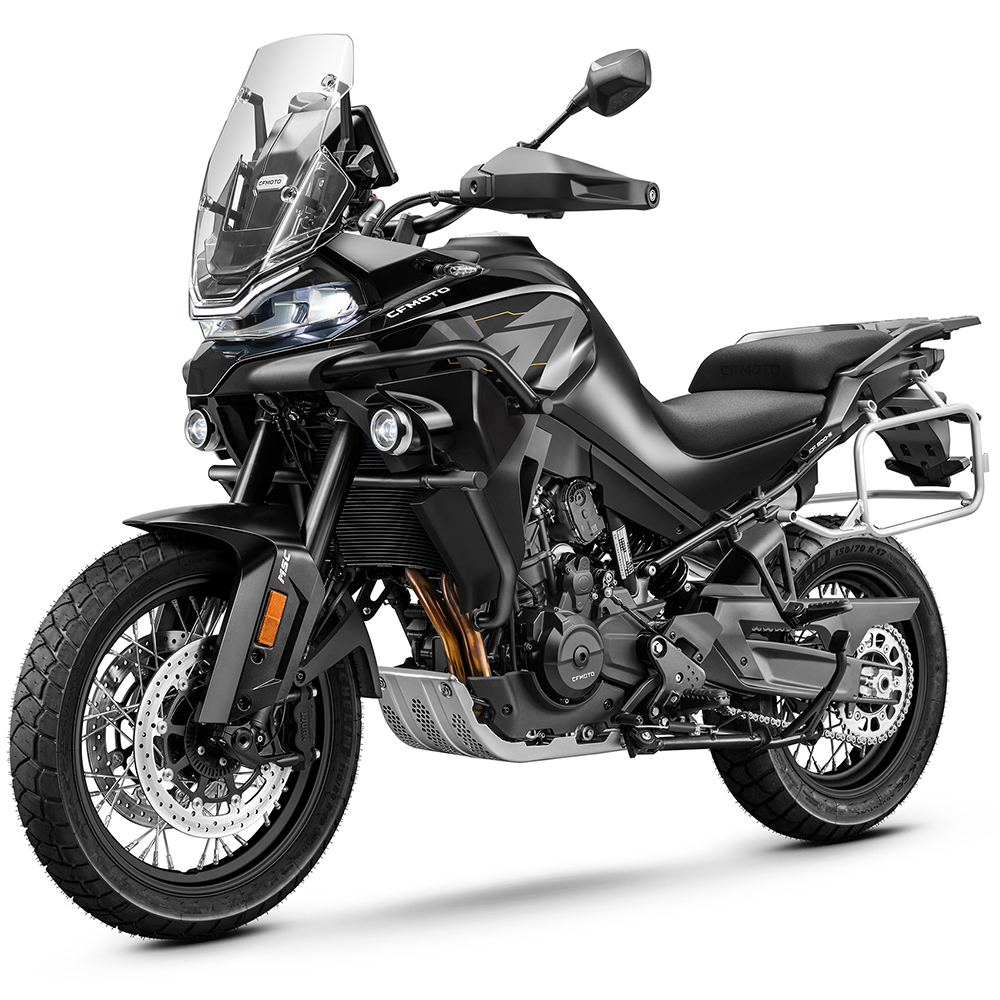
- Enter the challenger: the Parallel Twin. With the massive success of the CFMOTO 450MT and the Honda NX500, the twin-cylinder engine has become the preferred choice for those who view the North as a grand tour rather than a technical trial.
Smoothness and the “Long Day” Factor
- A Parallel Twin uses two smaller pistons that move in harmony (or opposition, depending on the crank angle). In 2026, the 270-degree crank has become the industry standard, giving these twins a “V-twin” character—a soulful rumble and smooth power delivery.
- The primary benefit here is refinement. If your route includes the long, sweeping pavement of the Ho Chi Minh Highway or the fast-flowing curves of the Red River Delta, the Parallel Twin is unbeatable. It doesn’t vibrate. It hums. This lack of vibration means your core muscles and joints aren’t absorbing the engine’s resonance all day. You arrive at your homestay feeling fresh, ready for a beer and a local meal, rather than needing an immediate nap.
Power at Altitude
- Northern Vietnam’s passes often exceed 2,000 meters. As the air thins, engine performance drops. A 450cc Parallel Twin, with its higher ceiling for horsepower, handles this loss of atmospheric pressure better than a smaller Single.
- While a 300cc Single might feel breathless as it nears the summit of the O Quy Ho Pass, a 450cc Twin still has enough “overhead” to overtake a slow-moving truck with confidence.
The 2026 Electronics Edge
- Parallel Twins in 2026 are generally positioned as “premium” middleweights. This means they often come equipped with more sophisticated AI-driven rider aids.
- Cornering ABS: Vital for the wet, oily asphalt common in Sapa.
- Adaptive Traction Control: Which learns the “slip” patterns of typical Vietnamese gravel and adjusts in real-time.
- Integrated Telemetry: Allowing you to track your lean angles and fuel efficiency through the mountains.
- Terrain Matchmaking: Where Each Engine Shines
- Northern Vietnam is not a monolith. The “North” consists of three distinct riding environments, and your engine choice should match your specific itinerary.
1. The Ha Giang Loop (Technical & Tight)
- Winner: Single Cylinder.
Reasoning: The roads in Ha Giang are often narrow, congested with locals on scooters, and filled with “blind” hairpins. The agility of a Single allows you to change lines instantly if a buffalo wanders into the road. The low-end torque is perfect for “walking” the bike through the steep, rocky shortcuts that make the loop famous.
2. The Northwest Traverse (Sapa to Dien Bien Phu)
- Winner: Parallel Twin.
- Reasoning: This route involves longer distances and better-maintained (though still mountainous) highways. The “Big Sky” vistas of the Northwest are best enjoyed on a bike that can cruise at $80 \text{–} 90 \text{ km/h}$ without feeling like the engine is about to explode. The wind protection usually found on Twin-cylinder ADV bikes is also a godsend in the cold Sapa mists.
3. The Northeast Frontier (Cao Bang & Ban Gioc)
- Winner: Tie (Rider Dependent).
- Reasoning: If you are sticking to the “Q” (National) roads, the Twin wins for comfort. If you are exploring the “DT” (District) roads that hug the border fence, the lightweight Single is safer and more fun.
The Maintenance Myth: Simple vs. Sophisticated
- One of the most common arguments for the Single is that “any village mechanic can fix it.” In 2026, this is only partially true.
- As engines have moved to Euro 5+ emissions standards, even the “simple” Singles now have complex ECU maps and fuel injection systems. However, the Single still holds the advantage in a “catastrophic” scenario.
- The Single Advantage: One spark plug, one cylinder head, one exhaust header. If you submerge the bike in a river crossing, clearing the water out of a Single is a 15-minute job. On a Twin, it’s a logistical nightmare that often requires a truck.
- The Twin Advantage: Modern Parallel Twins are built for longevity. Because the workload is shared between two cylinders, each component is under less stress. In a 2,000km expedition, a Twin is less likely to require a valve adjustment or show signs of “oil burn” compared to a high-revving small-displacement Single.
Fuel Economy and the “Jungle Range”
In the remote Western branch of the Ho Chi Minh Road, fuel is a currency.
- The Single: Typically achieves $3.5 \text{–} 4.0 \text{ L/100km}$ in the mountains. Its lighter weight means it uses less energy to fight gravity on every climb.
- The Twin: Typically achieves $4.5 \text{–} 5.2 \text{ L/100km}$. While thirstier, most 2026 Twins (like the 450MT) come with larger 17-18 liter tanks.
The Ergonomic Divide: Comfort vs. Control
- The Single Cylinder often comes in a “Dual-Sport” package (think narrow seats, minimal fairings). This is great for Control. You can move your body weight easily to balance the bike in a slide. However, after 5 hours, your tailbone will be screaming for mercy.
- The Parallel Twin is usually a “Travel” package. It has a wider seat, a more relaxed footpeg position, and better wind protection. This is great for Endurance. If you are a solo rider doing a 14-day trip, the “couch-like” feel of a Twin might be the only reason you make it to the end of the trip without a back injury.
- The Final Verdict: Choosing Your Heartbeat
- In 2026, there is no “wrong” choice, only a “wrong for the route” choice.
Choose the Single Cylinder if:
- You are a “Technical” rider who loves exploring the dirt tracks and H’Mong village paths.
- You are riding solo and want a bike you can lift alone in the mud.
- Your primary goal is the Ha Giang Loop and the Northeast “Border Belt.”
- You prioritize low-end grunt and “tractor-like” reliability.
Choose the Parallel Twin if:
- You are riding two-up with a passenger (The extra power is non-negotiable).
- You are doing a cross-country expedition from Hanoi to Hoi An.
- You value smoothness and want to minimize rider fatigue.
- You enjoy the “Premium” feel of modern 2026 electronics and dash connectivity.
- The North of Vietnam is a demanding teacher. It will exploit the weaknesses of any bike you bring.
- The Single Cylinder offers the agility to dodge the North’s punches, while the Parallel Twin offers the stamina to outlast its longest rounds. Listen to your riding style, look at your map, and choose the heartbeat that matches your own.
Good Luck!