

📋 Table of Contents
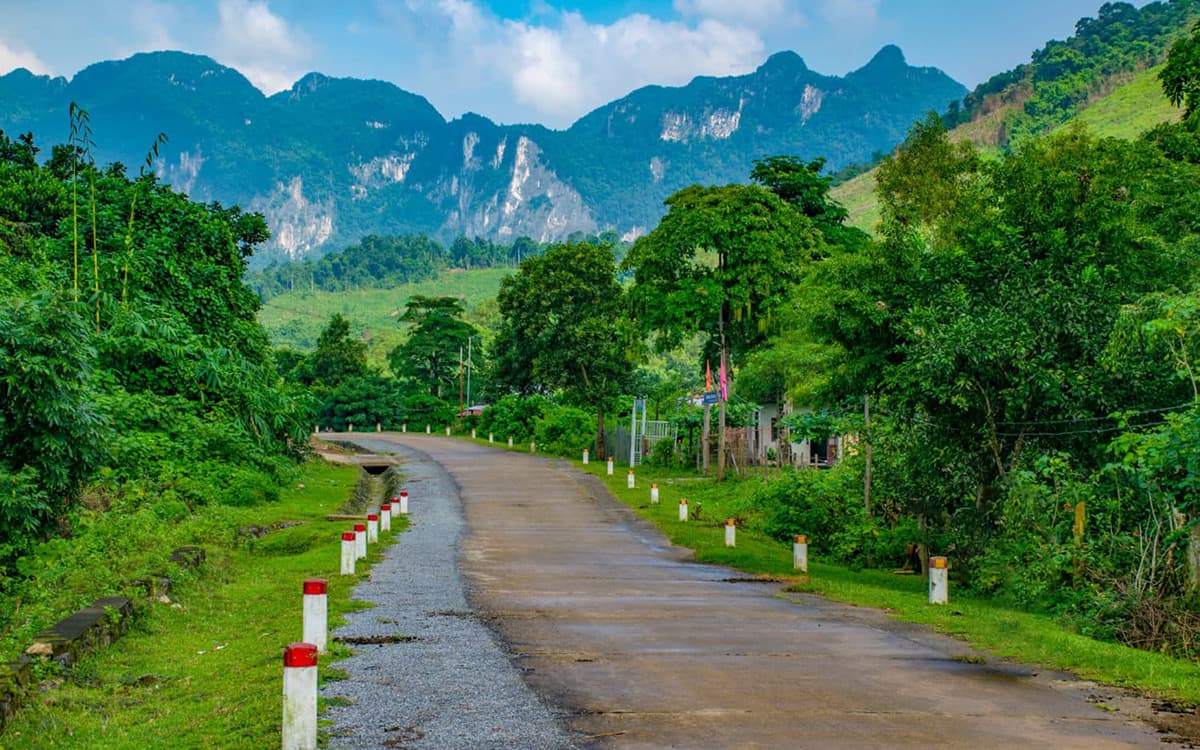
The Ultimate Technical Guide to the Ho Chi Minh Trail 2026 | Motorbike Vietnam: For the true adventure motorcyclist, the name “Ho Chi Minh Trail” evokes images of jungle-choked paths, secret mountain passes, and a history that changed the world. But in 2026, the experience has evolved. While the original wartime “trail” was a web of thousands of paths through Vietnam, Laos, and Cambodia, the modern Ho Chi Minh Road (Đường Hồ Chí Minh) offers a paved but incredibly remote journey through the “Western Spine” of the country.
- This is not a ride for the faint of heart. The Western Branch (Trường Sơn Tây), specifically the 240km stretch between Khe Sanh and Phong Nha, remains one of the most technical and isolated pieces of asphalt in Southeast Asia.
- In this guide, we deep-dive into why this route is the ultimate test for your machine and your skills, the “Hero Shot” locations you can’t miss, and a technical comparison of the best bikes for the job.
1. The Historical Gravity: Riding Through Ghosts
Before we discuss suspension settings and tire pressures, we must understand the weight of the land you are crossing. The Ho Chi Minh Trail was the lifeline of the North during the war, a logistical miracle that moved millions of tons of supplies under constant bombardment.
The DMZ and Khe Sanh Combat Base
Your journey through the central section begins near the 17th Parallel.
- Khe Sanh Combat Base: This is a high-altitude plateau that was the site of the most famous siege of the war. Today, you can still see the remains of the runway and captured American hardware.
- The Rock Pile: A jagged limestone karst that served as a US Marine observation post. It stands as a silent sentinel over the valley.
- Đa Krông Bridge: The gateway to the Western Branch. This bridge was a strategic bottleneck and remains a majestic photo spot where the mountains begin to close in.
2. Technical Breakdown: The Western Branch (Khe Sanh to Phong Nha)
This 240km section is the “Holy Grail” of Vietnamese riding. Unlike the Ha Giang Loop, which is crowded with “Easy Riders,” the Western Ho Chi Minh Road is often empty. You are alone with the jungle.
The Sa Mưu Pass (Đèo Sa Mưu)
Rising to over 1,000 meters, this pass is often shrouded in thick mist.
- The Terrain: The road is a series of tight, concrete-slab switchbacks. Because of the high humidity, the concrete can develop a layer of green moss that is as slippery as ice.
- The Risk: There is zero cell service and zero villages for nearly 200 kilometers. If you have a mechanical failure here, you are on your own until a local logging truck passes by.
The “Khe Gát” Junction
This is KM 0 of the Western Branch. It marks the point where the road dives deep into the Phong Nha-Kẻ Bàng National Park. The limestone formations here are some of the oldest in Asia, creating a “lost world” aesthetic that is perfect for cinematography.
3. The Bike Showdown: Selecting Your Weapon for 2026
The Ho Chi Minh Trail demands a bike that can handle 400km highway days and technical mountain passes with equal grace. Here is how our fleet compares for this specific route.
Royal Enfield Himalayan 450: The High-Altitude Sherpa
Why it wins: With 230mm of ground clearance and a 21-inch front wheel, it ignores the potholes and debris common on the Western Branch.
Tech Advantage: The integrated Google Maps on the Tripper Dash is a lifesaver when navigating the unmarked junctions of the Trường Sơn mountains.
Luggage: We equip these with 26L aluminum panniers, making it the best choice for riders carrying heavy camera gear for their “Hero Shots.”
CFMOTO 450MT: The Smooth Parallel-Twin
Why it wins: The 44hp parallel-twin engine makes the long tarmac stretches between towns effortless. It has a higher top speed than the Himalayan, allowing you to “make time” if you get a late start.
Suspension: The fully adjustable KYB forks are essential here. You can soften the rebound to handle the “washboard” concrete slabs of the mountain passes.
Kawasaki KLE500: The Japanese Reliability King
Why it wins: Simple, mechanical, and bulletproof. On a route where the nearest mechanic is 100km away, the KLE500’s reputation for reliability provides massive peace of mind.
Comfort: The seat and ergonomics are designed for long-distance touring. If you are doing the full 1,880km route from North to South, this is the bike that will keep you out of the chiropractor’s office.
Honda CRF300L: The Trail Specialist
Why it wins: If you plan on taking the “Technical Detours” into the dirt tracks that skirt the Laos border, the 142kg weight of the CRF300L makes it the only choice.
Limitations: It lacks the wind protection and fuel range of the 450MT or Himalayan for the long highway days.
4. “Hero Shot” Locations & Secret Detours
- The Border Fence Detour (Long Sơn)
- Near the village of Long Sơn, there are small tracks that lead directly to the border markers with Laos.
- The Shot: A panoramic view of the “Triple Border” region where the mountains seem to ripple into infinity.
- Technicality: Steep, rocky, and requires a permit. (We handle these permits for all our renters).
Vĩnh Mốc Tunnels (The Coastal Detour)
- While not on the main mountain road, a 40km detour to the coast brings you to the Vĩnh Mốc Tunnels.
- Unlike the touristy Cu Chi tunnels in the south, these are authentic and located on a stunning cliffside overlooking the South China Sea.
5. Logistics & Safety for the 2026 Season
The most common mistake riders make is underestimating the isolation of the West.
Fuel Strategy
There are NO gas stations between Khe Sanh and Phong Nha.
Technical Tip: We provide all 450cc rentals with a 2L auxiliary fuel bladder. Even with the 17L tanks on the 450MT and Himalayan, the mountain climbs consume fuel at a much higher rate.
The “Leave Early” Rule
In 2026, the weather patterns in Central Vietnam have become more unpredictable.
- The Rule: You must leave Khe Sanh no later than 7:00 AM.
- The Reason: If you encounter a landslide or a flat tire, you need as many daylight hours as possible to reach Phong Nha. Riding the Western Branch at night is strictly forbidden due to the lack of lighting and the presence of wild animals.
Communication
Invest in a Viettel SIM card. While service is non-existent in the valleys, you can often catch a signal on the mountain peaks to check your GPS or send a quick update.
6. Why Book with Duy Anh Motorbikes for the HCM Trail?
We aren’t just a rental shop; we are riders who scout these routes every month. When you rent a bike for the Ho Chi Minh Trail from us, you get:
- A Pre-Tuned Machine: Suspensions are dialed in for the specific weight and terrain of your trip.
- The Digital Map Pack: A custom Google Maps layer with every “Hero Shot,” hidden bunker, and reliable fuel stop.
- Support: A 24/7 hotline with English-speaking mechanics who know these bikes inside and out.
Conclusion: The Ride of a Lifetime
The Ho Chi Minh Trail is more than a road; it is a pilgrimage. Whether you are chasing the historical ghosts of the DMZ or testing the limits of the new Himalayan 450 on the Sa Mưu Pass, this route will change how you see Vietnam—and how you see yourself as a rider.
Ready to start your 300-post journey?
Click [here] to view our current fleet or [here] to book your 2026 Ho Chi Minh Trail adventure.