

📋 Table of Contents
What to Do if Your Motorbike Rental is Impounded by Police in Vietnam: For a serious rider, “Vehicle Impoundment” (Tạm giữ phương tiện) is the ultimate nightmare. In 2026, as Vietnamese authorities move toward stricter enforcement of A2 license categories and 1968 IDP compliance, impoundment has become a standardized penalty for riding without the correct documentation.
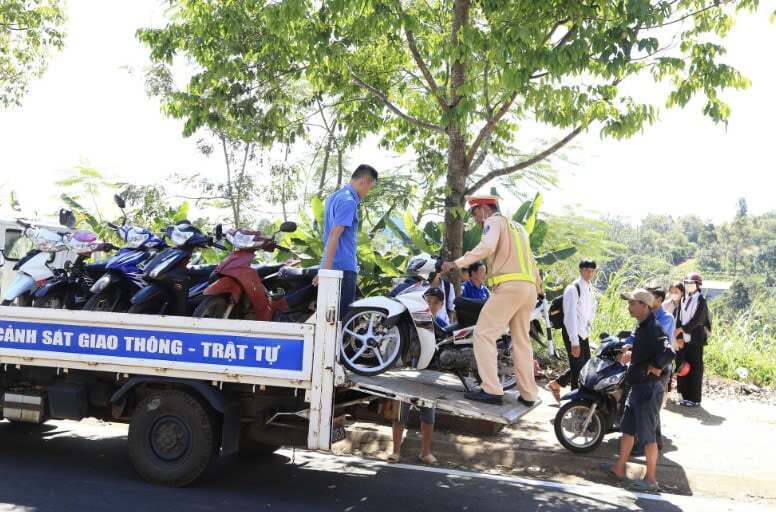
If your rental motorbikes – like a Himalayan 450, Kawasaki KLE500, Honda XR190. Honda XR150, Honda NX500 or CFMOTO 450MT – is being wheeled onto a police truck in a remote town like Ha Giang Loop or Dong Van, you need to act with technical precision. Here is the professional protocol for managing a bike seizure.
1. The Moment of Seizure: The “Biên Bản”
If the officer determines you are riding unlicensed (e.g., you have a 1949 IDP instead of 1968, or no motorcycle endorsement), they will begin the impoundment process.
- The Document: You must receive an official Administrative Violation Record (Biên bản vi phạm hành chính).
- The Details: Ensure the record accurately lists the bike’s condition, your passport details, and the location of the impound lot (Bãi tạm giữ).
- The Receipt: You will be given a receipt. Do not lose this; it is the only legal “key” to getting your bike back.
2. The Timeline: The 7-Day Standard
In 2026, the standard impoundment period for serious licensing violations is 7 days.
- The “Cooling Off” Period: During this time, the bike is held in a secure (though often outdoor) police facility.
- The Costs: You are responsible for the daily storage fee, the fine (typically 6M–8M VND), and the ongoing rental cost to the shop in Hanoi.
3. The Recovery Protocol: Why Your Hanoi Base is Vital
This is where the advantage of renting from a professional Hanoi-based fleet becomes clear.
- Immediate Communication: Call your rental partner in Hanoi the moment the record is written. They are the legal owners of the bike.
- Legal Representation: In many cases, the “owner” (the rental company) must be present or provide specific notarized authorization to release the vehicle. A professional shop in Hanoi can coordinate with the local police department in the North to handle the bureaucracy.
- Retrieve Management: If you cannot wait 7 days in a remote village, the Hanoi team can arrange for a truck to recover the bike once the impoundment period expires, allowing you to return to Hanoi via bus or car.
4. What NOT to Do
- Do Not Negotiate Aggressively: In 2026, many checkpoints are monitored by cameras. Attempting to “bribe” your way out of a formal impoundment can lead to criminal charges.
- Do Not Abandon the Motorbike: You are contractually liable for the vehicle’s value. Leaving a $7,000 adventure bike in a police lot without informing your rental partner will result in massive legal and financial penalties.
5. Prevention: The Professional’s Shield
The best way to handle impoundment is to ensure it never happens.
- Document Audit: Before leaving Hanoi, ensure your 1968 IDP matches the engine displacement on the bike’s Blue Card.
- Compliance Checks: Professional shops in Hanoi will pre-screen your route, advising you on which districts are currently running “Strict Enforcement” campaigns.
- The Bottom Line: Vehicle impoundment is a logistical and financial disaster that is 100% avoidable with the correct 1968 IDP and a professional bike from Hanoi. If the worst happens, stay calm, secure your Biên bản, and let your Hanoi support team lead the recovery.
Good Luck!