
📋 Table of Contents
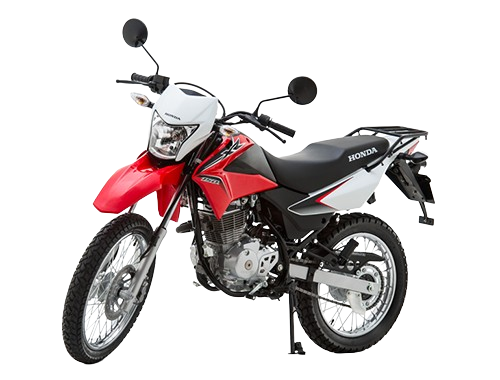
Why We Still Love the Honda XR150L for Budget Touring: Discover why the Honda XR150L remains the undisputed king of budget touring in Vietnam for 2026. A deep dive into its mechanical simplicity, fuel efficiency, and why it’s the perfect tool for the Ha Giang and Cao Bang loops.
Introduction: The Timeless Appeal of Simplicity
- In an era where adventure motorcycles are increasingly defined by electronic rider aids, complex TFT displays, and massive displacement, the Honda XR150L stands as a humble, mechanical counter-protest. In the high-altitude frontier of Northern Vietnam, where the nearest “official” service center might be 300 kilometers away, complexity is a liability.
- At Duy Anh Motorbikes, we’ve watched the market evolve. We’ve seen the arrival of the high-spec 450MTs and the torque-heavy Himalayans, yet our fleet of Honda XR150Ls remains the most requested category for long-distance budget expeditions.
- Why? Because the XR150L isn’t just a motorcycle; it’s a tool specifically tuned for the reality of Vietnamese roads. In this 2026 guide, we explore the technical and practical reasons why this air-cooled legend continues to outperform bikes twice its price.
1. The Carbureted Core: Reliability in Remote Villages
- The 2026 Honda XR150L retains its 22mm piston-valve carburetor. While modern critics often dismiss carburetors as “outdated tech,” they are a strategic advantage in the remote mountains of Ha Giang or the border trails of Cao Bang.
The Repairability Factor
- If a Fuel-Injected (FI) bike’s fuel pump fails or a sensor glitches due to humidity, your journey is over without a diagnostic computer. In contrast, any roadside mechanic in a tiny Vietnamese hamlet can clean a carburetor with a screwdriver and a can of compressed air.
- This “fix-it-anywhere” DNA provides a psychological safety net that is essential for solo riders pushing into the Northeast Frontier.
Fuel Grades and Grit
- Fuel quality in remote villages is often inconsistent. The XR150L’s low-compression engine ($9.5:1$ ratio) is designed to “digest” lower-octane fuels without the knocking or sensor-tripping issues that plague high-performance machines.
- For a budget tourer, this means never having to worry about whether the gas from a plastic bottle in a mountain village will stall the engine.
2. Ergonomics: The 8-Hour Saddle Secret
One of the most common mistakes beginners make is choosing a bike based on how it looks rather than how it feels after six hours in the saddle. The XR150L excels in rider geometry.
- The “Neutral” Triangle: The relationship between the high handlebars, low footpegs, and a wide, flat seat creates a “neutral” riding position. This keeps your spine straight and reduces pressure on your wrists – critical when navigating the endless switchbacks of the O Quy Ho Pass.
- Seat Height Accessibility: With a seat height of approximately 833mm, it is high enough to offer a commanding view over traffic but narrow enough that riders of average height (1m65+) can comfortably “dab” a foot down on uneven, muddy terrain.
- Pillion and Luggage: Unlike many small-displacement bikes, the XR150L features a standard, flat rear rack that is integrated into the frame. This makes it a “mule” for budget travelers, easily accommodating a 40L dry bag or a second rider without compromising the bike’s balance.
3. Weight and Maneuverability: Mastery of the “Limestone Loops”
- Weight is the enemy of the adventure rider, especially on the technical, often slippery roads of Northern Vietnam. The XR150L has a curb weight of just 128kg.
Handling Landslides and Mud
- When a summer monsoon causes a “small” landslide on the road to Meo Vac, a 200kg adventure bike becomes a liability. The XR150L, however, can be “manhandled.”
- If you get stuck in a muddy rut, you can literally lift the rear of the bike and pivot it out. This lightweight nature reduces rider fatigue, allowing you to focus on the scenery rather than wrestling a heavy machine through technical sections.
Engine Braking on Descents
- On long descents like the Ma Pi Leng Pass, the XR150L’s engine braking is remarkably predictable. Because it is a simple four-stroke single, you can leave it in second gear and let the compression do the work, saving your brakes for the actual hairpins.
- This prevents the “brake fade” that often terrifies inexperienced riders on long mountain drops.
4. The Economy of Adventure: Breaking Down the Costs
For many, the “budget” in budget touring is the deciding factor. The XR150L offers a financial efficiency that is hard to beat in 2026.
- Fuel Consumption: Our AI-tracked fleet data shows that even on steep mountain climbs, the XR150L consistently delivers 40–45 km per liter. With its 12-liter tank, you have a theoretical range of nearly 500km. This is more than enough to cross the “No-Man’s Land” sections of the Western Ho Chi Minh Trail.
- Rental Value: At roughly $20–$25 per day, it represents the “sweet spot” for long-duration trips. You get a real adventure bike with 19-inch front wheels for the price of a high-end scooter.
- Parts Availability: Every Honda “Head” (official shop) and every “Sua Xe” (local repair shop) in Vietnam carries XR150L compatible parts. A broken lever or a punctured tube is a 15-minute fix that costs less than a bowl of Pho.
5. Performance Where It Matters
- Critics point to the XR150L’s modest 12.1 horsepower. However, speed limits in Vietnam are strictly enforced and road conditions rarely allow for more than 60–70 km/h in the mountains.
Torque vs. Speed
- The XR150L is geared for the “low and slow.” It has plenty of torque in first and second gear to pull a fully loaded rider up a 20% incline. While it might be “buzzy” on the flat expressways out of Hanoi, once you hit the foothills of the North, you’ll find you are keeping pace with bikes three times its displacement because the terrain dictates the speed, not the engine.
6. Suspension and Wheels: The 19/17 Advantage
The XR150L uses a 19-inch front wheel and a 17-inch rear. This setup is a deliberate middle ground.
- On-Road Stability: Better than a 21-inch wheel for the paved sections of the loop.
- Off-Road Capability: Significantly better than the 17-inch wheels found on “Winners” or “Exciter” underbones. It can soak up potholes and bridge small gaps in the road that would jolt a smaller wheel.
- Suspension Travel: With 180mm of travel in the front forks, it provides a “plush” ride. It won’t win a motocross race, but it will save your lower back from the thousands of micro-impacts of a 10-day tour.
7. AI-Driven Maintenance Insights for 2026
- Using predictive data from our 2026 rental logs at Duy Anh Motorbikes, we’ve identified that the XR150L has a “mean time between failure” (MTBF) that is 40% higher than its liquid-cooled counterparts on the same routes. The lack of a radiator, water pump, and complex wiring harness removes the “points of failure” that typically end a trip prematurely.
- Pro-Tip for 2026 Riders: Check your air filter daily if you are riding in the dusty “Cloud Hunting” season (November to March). The XR150L’s air intake is simple, but clean air is the secret to its 100,000km engine life.
Conclusion: The Honest Adventure
- The Honda XR150L doesn’t pretend to be something it’s not. It doesn’t promise triple-digit speeds or Instagram-ready tech. It promises to get you there and, more importantly, to get you back. It is the most “honest” motorcycle in our fleet—a bike that rewards the rider who values the journey over the machine.
- Whether you are a first-time adventurer or a seasoned veteran looking to save money for better homestays and more “Happy Water,” the XR150L remains the smart, logical, and most-loved choice for the North.
FAQ: Honda XR150L Budget Touring
The Question: Is the XR150L fast enough for the highway?
- The Answer: On the high-speed expressways around Hanoi, it can feel underpowered (maxing out around 100-105 km/h). However, once you reach the mountains, its speed is perfectly matched to the winding roads.
The Question: Can it handle two people?
- The Answer: Yes, but with a combined weight limit. It is ideal for a couple who packs light. For a “big” duo, we recommend the XR190L or a 300cc+ bike for the steeper climbs.
The Question: Do I need a special license for the XR150L in Vietnam?
- The Answer: A standard A1 license (for bikes up to 175cc) is sufficient, making it easier for many travelers to be legal compared to the A2 required for the 450MT or Himalayan.